Working from home brings more freedom of choice
I’m a millennial, so you know I love working from home! I think working from home gives you a lot more control over your choices throughout the day. While that’s my preferred option and I would love to be able to work remotely 100% of the time, my current job requires me to go into the office at least 3 days per week. It also requires some occasional travel away from home. It can be taxing for a lot of reasons. Hopefully these six practical tips will help you make the most sustainable and healthy choices if you also have to commute into a corporate office.
Tip #1: Start your day with a healthy breakfast and bring your own food
The one thing I hate most about the office is the expectation to indulge in candy and treats. Actually no, the comments people make about your eating habits or choices is the worst. I think it’s important to start the day with a healthy breakfast at home. Having a healthy and balanced breakfast that keeps you full until around lunch time makes it a lot easier to say no if you don’t want to indulge in the office treats. For me and my husband, eggs and a protein smoothie are the “staples” but we will add other items when we feel like it. Sometimes we’ll have avocados, potatoes, meat, or fruit depending on how we feel, how hard our workouts were, or how the rest of our day of eating looks.

My go-to response when someone asks me to indulge is to repeatedly say “no thanks”. If I really feel that I’m being pressured I’ll say “no thanks, I don’t eat sweets during the week”. And when someone questions my sanity for not eating sweets during the week, I just smile and say “once you get used to how great you feel without eating sweets, it’s really not that hard to say no”. That one is usually a conversation-ender.
I also pack my own lunch. We have a cafeteria on site, but they usually don’t have the types of foods I would choose. My husband and I are big meal prep fans. We always make sure to have food prepared to take to lunch. Because we have a cafeteria on site, a lot of the team lunches are on site as well. This means I can still bring my own food! When I do get an invite for an off site lunch, I just make the best choice I can with the options I have.
Tip #2: Prevent unnecessary waste
Preventing waste is another reason that I bring my own lunch from home. I can bring my own container and silverware versus using disposables that are provided at work. In pre-COVID times the site cafeteria had real trays, plates, and silverware but now all food comes in disposable containers. There was at one time an initiative to compost materials at work, but unfortunately that initiative has died as well. When you bring your own lunch, you can put your apple cores, bananas, or other food waste in your glass container or a reusable silicone bag to take home to compost. Silicone reusable bags are also great for snack foods like nuts, grapes, sliced carrots or peppers, etc. I always bring an “un-paper towel” which is essentially a small cotton cloth that acts as a reusable paper towel. When I grab my hot food container out of the microwave or need a napkin it comes in handy. This prevents me from having to use paper towels, which is what most other people do.
While it’s much easier to print something while you’re in the office since you’re not the one paying for ink and paper, don’t print things unnecessarily! Some people print just about every email they receive for “reference”. If you have a good organization system for your emails, you won’t have to worry about doing this. You can also consider using an application like Microsoft’s One Note for organizing meeting notes and to do lists. You can also send your emails to One Note to make for easier filing if you prefer One Note over Outlook to have everything in one place.
Tip #3: Ergonomic best practices
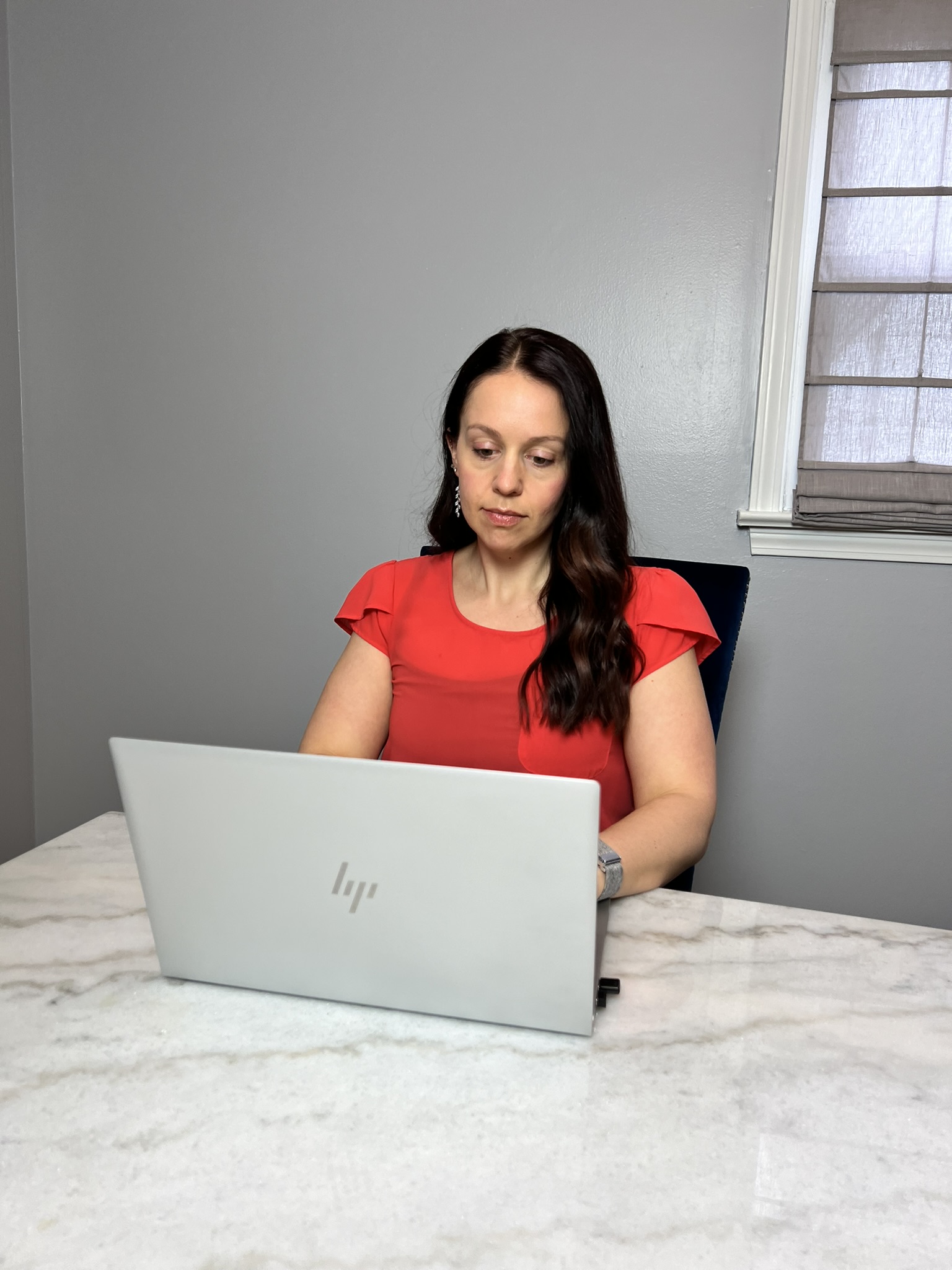
Ergonomics applies whether you’re working at home or in the office. If you’ve never heard of ergonomics, it’s defined as the study of people in their working environment. The goal of this type of study is to mitigate risks for discomfort and injury in the workplace. For some people, this can relate to repetitive manual labor tasks like loading material onto a pallet. For others it can relate to the setup of your desk and office if you’re spending a lot of time on the computer or in meetings. If you are doing a lot of repetitive manual labor work for your job, there should be a safety or ergonomic specialist that you can work with. All tasks are slightly different and may have different requirements.
I’m going to focus on rules of thumb for people that are primarily office or desk workers like me. Make sure you have a good chair and desk setup. Ideally both will be adjustable. Ensure your feet are flat on the floor. When you’re typing on your keyboard your elbows should be at a right angle without feeling like you’re reaching too high up or down. Your chair should have decent back support and you should sit upright for the best posture.
When I was growing up, I hated being confined to a table or desk to work on homework. I was the kid laying on the floor, couch, beanbag, or bed to get my work done (even in college!). I’m better at working from a desk now. However, I often catch myself slouching, leaning, sitting cross-legged, or sitting with one leg under me. I have to remind myself all the time (in fact I did just now as I’m writing this) to sit in a way that’s better for my posture.
If you can’t invest in a new desk or chair right now, make do with what you have! When work from home started, my husband and I worked from a $100 Wal-Mart small kitchen table and chair set. I ended up adding some pillows under me to make it bearable until we could invest in office chairs. And even then, we still had the tiny table. Try to sit up straight. Add something under your feet like a box to keep your feet flat if you’re on the shorter side.
Another good option if you’re able to invest in it is a standing desk and/or a walking pad. We’ve upgraded to standing desks and all our offices and cubicles on site are also equipped with standing desks. I use them way less frequently than I want. It’s a continual goal to try to increase the frequency and amount of time I stand in a day. I’ve also found that if I’m listening to a meeting it’s way more difficult for me to stand properly. I end up leaning or slouching. When I have time without meetings to work on something, that’s when I’m likely to have the best posture while standing.
I’ve heard great things about walking pads and that it really helps to get your steps in throughout the day. I personally don’t have one and have never used one. It would be a great investment if you think it’s something you’ll use and will help you get more activity in! I need to use my standing desk more often before I would consider investing in a walking pad.
It’s also important to take breaks from the computer. My days are typically so full of meetings that I cherish a 5-minute break to walk to the bathroom and back. Something I’m working on is scheduling in 15-30 minute breaks throughout the day. Taking a few laps around the office or outside, or doing a quick stretch/mobility routine would vastly improve my productivity. You could also consider going for a walk for 1:1 meetings where you don’t need to take notes or don’t need your computer. 20/20/20 is also a good rule of thumb for a computer break. Every 20 minutes, look away from your computer at something about 20 feet away for 20 seconds.
Tip #4: Responsible transportation choices
One of the biggest positives of working from home is not having a commute. It saves you time, it saves you money, it saves the environment from the emissions of extra cars driving on the road, and depending on if you are a video on versus video off type of company it might save you some make-up or save you from another day of heat on your hair. If you find that you must go into the office a few days a week like me, you can look into a few different options.
My schedule changes day to day and there are not great public transportation options around, so I drive to work. It’s about 15-20 minutes away. We own a hybrid Toyota car and a Jeep truck (and yes, we still call ourselves environmentalists!). My husband works 100% remote but will sometimes drive throughout the day to an appointment or lunch meeting. Whoever is driving furthest that day takes the Toyota. If the weather is poor then whoever is driving furthest takes the Jeep. Depending on where you live, you may find yourself in a similar situation so you have to make the best choice you can.
If I were to take public transportation it would add about an hour of commute time. My time is too valuable to me, so I make the next best choice. If you do have public transportation widely available to you that’s a great option! It also allows you time to focus on other things during your commute like reading, studying, or learning a new language. If you live close to someone else who works at the same place or in a similar location, you could also ride share with those people and alternate who drives into the office. This can get complex if you have shifting schedules, but is another good option to reduce emissions on your commute.
Tip #5: Prioritize your health and well-being through work/life balance
A lot of people find this difficult in the corporate world. I’ve been told I’m “too good” at taking vacations, so I think I’m the right person to share some tips! I want to start by saying that you agreed to perform a job in exchange for benefits. Unless it was spelled out from the beginning that you were signing up to be on call and checking emails 24/7, then you’re entitled to take time off. And when I say time off, that means to fully disconnect and not even have access to check your emails.

I plan vacations and time off far in advance. When I know I have time off coming up, I spend a lot of time organizing to prepare for it. I make a list of things that I know need a follow up while I’m out. Then I consider who is the best person to delegate those items to. Sometimes I’ll ask my direct reports to help, sometimes I’ll ask my manager to help, and sometimes I’ll even ask people outside my direct reporting line to help if I think they’re best equipped. I promise you that you are NOT the only person who can do your job! You can rely on other people to help you stay afloat.
I also know that the people I’m closest to (my team, manager, and others who I’ve assigned small tasks) have my phone number. If it’s truly something that no one else knows how to do, they can call or text me. Spoiler alert – I’ve never had that happen! I don’t just expect people to pick things up for me while I’m out, I also offer to pick things up for others. You can always count on me to encourage my coworkers to take full time off vacations. Disconnecting from work and reconnecting with the people you care most about is so important to live a fulfilled life!!
I don’t even have email or teams on my phone. I used to have a separate work phone. I didn’t mind this because I could choose when to silence it or not look at it. Now we must keep everything on our personal phone and that would be too tempting to me to have available all the time. I like having it separate so I plan to keep it that way. If something urgent happens off hours, the important people have my phone number and can text me. Otherwise I’m sure it can wait until the next time I’m online.
I think the higher you climb on the corporate ladder, the less acceptable these behaviors are. But as a low level leader in the company I’d like that to change. I’m going to continue to model these behaviors. I encourage my team to do the same thing and I luckily have a fantastic manager who supports me in this.
You’re allowed to set boundaries. Work should control the 40-hours per week (or whatever you’re contractually obligated to) that you’re expected to perform your job, but it shouldn’t control the other 128-hours of your week! Remember, you signed up to perform a job in exchange for benefits like health care and vacation. Use your benefits. Your health and well-being are not items to wave off for another few hours of corporate work. I know we all like to think that we are irreplaceable to our companies. Just remember, if you left, they would replace you in a few weeks and the company would be just fine.
Tip #6: Managing your exposure (and your stress levels)
In public places we have less control over our exposures. This includes cleaning products, extra EMFs, poor air quality, among other job-specific exposures. At the end of the day, what’s most important is to not stress about these things! Even if you’re going into the office every day, that’s only 40-50 hours out of a 168-hour week. That’s 24-30% of your week. The habits you have at home will certainly outweigh anything that happens at work. If you want to focus on making changes to these “uncontrollables”, consider if there are any groups at work you can join around sustainability or leadership. This way you can try to influence some changes from the ground up. You can educate other people in your work circle and make changes that are not just going to benefit your health, but the health of everyone around you.

A Healthy and Sustainable Balance
As I’m writing this blog post, it’s truly the busiest I have ever been in my seven and a half years in the corporate world. I am behind on everything in my corporate work, my Responsible Journey work, and my personal life, just trying to stay afloat and get the next thing done. I have had more 10 and 12 hour corporate days in the past month than any other time in my career. Truthfully I’m not feeling very balanced.
But I know this season will not last forever. There are career changes coming, and I have a two-week long vacation that will be here in two weeks. My house may not be clean, but I’m still eating healthy. I might be more stressed than ever, but I meditate in the evenings to ensure I’m clearing my mind and sleeping well to prepare for the next day. Regardless of this busy season, you better believe I’m leaving my computer at home for my two-week vacation. While I’m not feeling my best, I know I have to keep up some small healthy habits (like eating healthy and sleeping well) to avoid burnout. You should not feel this way every day for months on end! If you do, I would challenge you to identify and try a new habit to bring more balance to your life.