
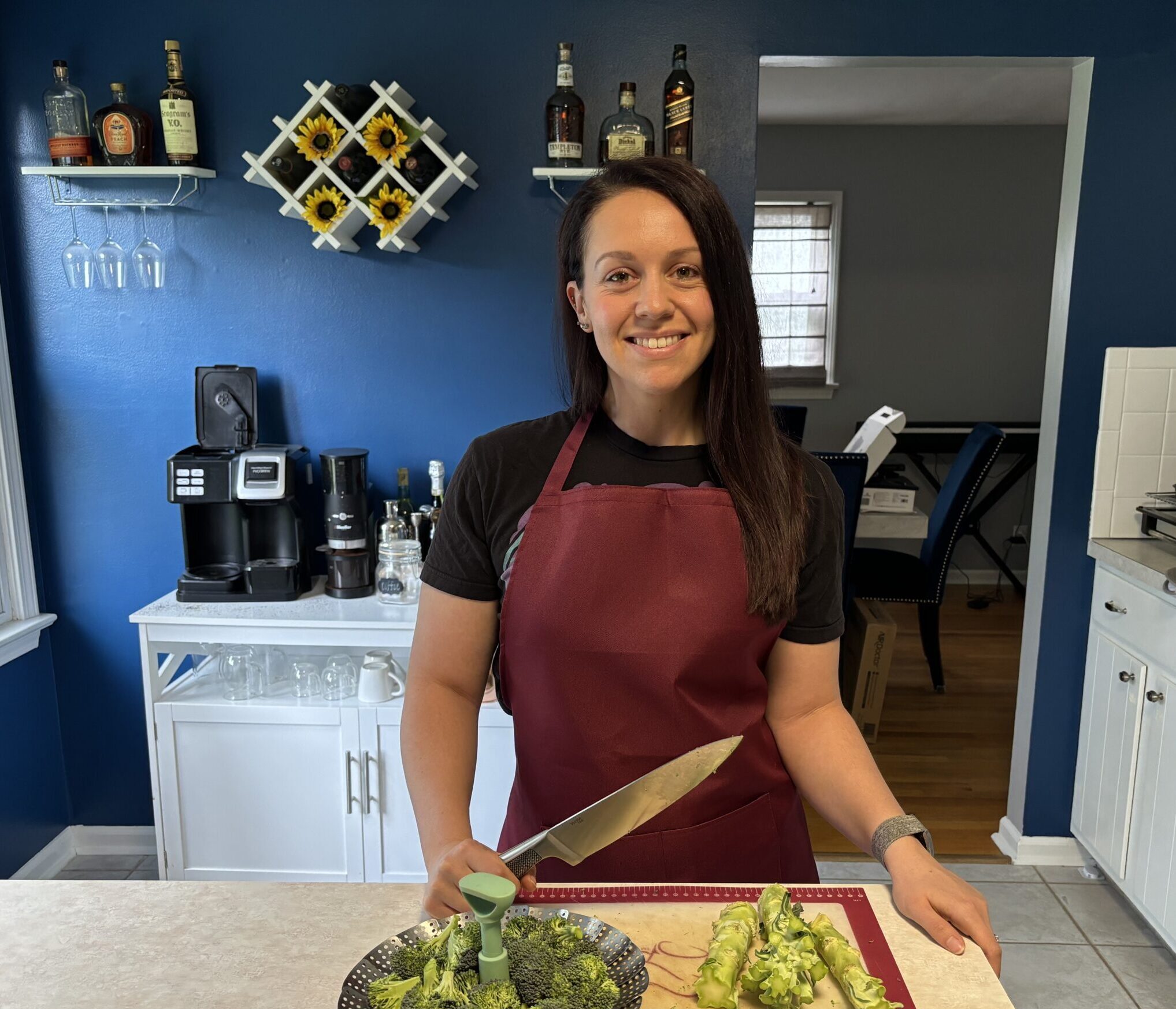
I’m not a “good cook”, but I still cook most of my meals
I used to consider myself a terrible cook. Truthfully when I was house sitting in high school, I called a friend and asked her how to make pasta (apparently I didn’t trust the instructions on the box?). I helped my mom in the kitchen occasionally, but it was with smaller tasks she delegated to me. Even today, I still wouldn’t consider myself a good cook since I need a recipe to follow. But I do recognize its importance in helping me eat healthy. Throughout the past 7 years of my healthy eating journey, I’ve learned a few things that have helped me prioritize cooking my own food. First we’ll learn the best cooking methods for various foods based on some research studies. Then we will talk through my best tips for prioritizing cooking in your busy life!
The data on why cooking your own food is important
Before we get into cooking methods, let’s walk through the data demonstrating why cooking at home is important. This study indicates eating home-cooked meals leads to eating more fruits and vegetables per day (up to 2 additional servings). It also indicates that people regularly eating home-cooked meals were ~25% less likely to have excess body fat and ~25% less likely to be classified as “overweight” by Body Mass Index (BMI). These statistics were true for people who ate home-cooked meals most frequently (> 5 times per week) and did not hold true for those who ate home-cooked meals less frequently (< 3 times per week). There are a lot of reasons why BMI is not the best measure of health or fitness (we can get into that more another day!). However, BMI is still an accepted measure of health in the medical industry. Thus BMI is still a primary metric in studies today.
The same study also indicated better cardio-metabolic health in those who ate home-cooked meals most frequently. Cardio-metabolic health is related to a lower risk of developing high cholesterol and diabetes. One confounding factor that was not investigated as part of this study was if people who eat home-cooked meals are also engaging in other healthy behaviors more frequently. For example, if people who eat home-cooked meals more frequently are also doing more cardio workouts, the cardio workouts may be the reason for better cardio-metabolic health rather than their diet. Home-cooked meals are also likely to contain less processed foods with less additives, which can support a healthier lifestyle.
The most important thing to gain from this study is that you have to cook at home more frequently than not to gain the benefits. Now let’s say for instance that the benefits are in fact derived more from confounding factors than cooking at home. The development of a positive habit, such as cooking more of your meals, is likely to compound. Maybe it will help you develop other positive habits, potentially leading to those positive confounding factors. Crazy, right? If you struggle to cook meals at home, head down to the “My favorite tips for cooking more at home” section for some of my best tips.
Best cooking methods for meat
Slow and low temperature roasting is the healthiest way to cook meat. Polycyclic aromatic hydrocarbons (PAHs) are chemical compounds that generally exist in meats that are dried and/or smoked and then grilled or fried at high temperatures. PAHs are a family of chemical compounds that are toxic, mutagenic, and/or carcinogenic. This means they can change our DNA and they are highly likely to increase risk of cancer.
In this study, it was found that PAHs in beef were more bioaccessible than chicken. Bioaccessibility refers to how easily our bodies are able to access and absorb a material. So in this case, charred chicken is better than charred beef from a PAH accessibility standpoint. It was also found that bioaccessibility of PAHs increased with degree of meat doneness and fat content of the meat. The greater the fat content or more well done your meat is, the more your body will absorb the PAHs.
Summertime meals on the grill are great, but when cooking meat day to day, it’s best to use the low and slow method (at least when using PAHs as a guidepost)! You can do this by roasting meat in the oven, low temperatures on the stovetop, or in a crockpot.
Best cooking methods for vegetables
If you’ve ever wondered how to best preserve nutrients while cooking vegetables, the best way is by steaming them. A study compared 5 different cooking methods for broccoli (steaming, boiling, microwaving, stir-frying, and stir-frying/boiling) by measuring the quantities of nutrients before and after cooking. They measured nutrients like Vitamin C, glucosinolates, and carotenoids, all of which are beneficial to human health. There was significant Vitamin C and glucosinolate loss found in all samples except the steamed sample. Steaming also retains almost all carotenoids. The study measured total soluble proteins and soluble sugars as well. These were reduced by every cooking method, but were reduced the least by steaming. Now, it’s possible a different vegetable may respond to the different cooking methods in a different way than broccoli. But, we have to work with what we have.
Steaming is the primary way we cook vegetables, and it’s so easy! We bought a stainless steel steamer a few years ago. If you add enough water to cover the bottom of a large pot, bring it to a boil, load up your vegetables in your steamer, then add it to the pot for 3-5 minutes, it’s done! When I’m meal prepping vegetables by steaming, I like to leave them a little crunchy and run them under cold water as soon as I remove them from the steamer. This way, when I warm them up, they’re the perfect texture.

Best cooking methods for fruits
There are a lot of opinions out there on fruit and how much you should or should not eat. Some people say it should all be avoided due to too much sugar, some people say to avoid it in specific forms like smoothies or fruit juices because it changes the nutrition and the way your body reacts to the fruit.
There is some merit to the fruit juice claim. A meta-analysis of studies found that drinking more fruit juice correlates with a higher risk of developing diabetes. The theory behind this finding is that dietary fiber contained in whole fruits is helpful in regulating insulin and glucose. Fruit juice, however, is missing this fiber and thus causes a high spike in glucose and insulin. We typically avoid juices on a day-to-day basis.
While there’s not much comparative data between whole fruit and blended fruit in a smoothie, I did find one small study which used 20 college students. The study tested their glucose levels after consuming whole fruit and blended fruit. Apples and blackberries were used together in both cases. The maximum glucose level was significantly lower in the blended fruit compared to the whole fruit. The level of glucose at 60 minutes after consumption was marginally lower in the blended fruit compared to the whole fruit.
While there are minimal other studies, one additional study found that glucose values were similar for fruits like apples and mangoes when comparing whole and blended, but glucose values were much lower for fruits like raspberries and blackberries when blended compared to whole. The hypothesis is that when seeds are included and blended, they break down. This process provides more fiber and nutrients to further reduce any glucose spikes.
I personally think smoothies can be a good way to add nutrients to your diet. I have a smoothie almost every day. However, it’s also important to ensure your smoothie contains other ingredients rather than just fruit. I like to include flaxseed or MCT oil for fat, spinach or kale for greens, and a protein powder or collagen for protein. Based on the data, it seems that berries with seeds are the best type of fruit to use in your smoothie due to the release of additional fiber and nutrients from the seeds. My personal opinion is that I’m not concerned with consuming fruit in smoothie form because I make sure the smoothies also contain protein, fat, and fiber from other sources. It may be best to avoid fruit juice in large quantities, though!

Best cooking oils to use
The biggest takeaway here is to not use oil or fat above its smoke point. When you heat any type of oil above its smoke point, it will break down into components that can be carcinogenic. The smoke point of olive oil is around 350°F for reference (can be anywhere from 325-375°F depending on the type). This is why many restaurants use seed and vegetable oils because the refining process leads to a much higher smoke point. Restaurants use oils in a lot of ways, but one is for frying food. In general it’s best to avoid fried foods. Fried foods correlate with a higher risk for type 2 diabetes and heart failure along with a higher risk of obesity and weight gain.
Many restaurants also reuse oil. Depending on the type of oil and temperature it’s at, the oil can degrade and negatively affect the nutritional profile of your food. If you’re looking for some options with a higher smoke point, I would consider the following healthy alternatives: olive oil, butter, and coconut oil have a smoke point of around 350°F, beef tallow has a smoke point of around 400°F, ghee (clarified butter) has a smoke point of around 450°F, and avocado oil has a smoke point of around 520°F.
We use a lot of olive oil and butter, but we also don’t do much cooking at high temperatures. If you’re regularly cooking at higher temperatures than the smoke point of the oil you’re using, consider trying a different option out of the healthier alternatives listed above.
Don’t forget your herbs and spices!
Experiment with and use many different spices and herbs! Spices and herbs have been used for hundreds of years not only to flavor food, but to provide medicinal benefits as well. The below are a few examples of what spices you can use if you’re struggling with a particular issue.
- Antioxidants – basil, parsley, sage, thyme
- Antimicrobial or antibacterial – basil, cinnamon, oregano, thyme
- Anti-inflammatory – ginger, oregano, sage, turmeric
- Anti-cancer properties – cloves, cumin, parsley, turmeric
- Digestion aid – ginger, rosemary
- Circulation aid – cayenne, cinnamon
We use a lot of herbs in our cooking!
- For potatoes, I usually go with salt, pepper, parsley, garlic powder, garlic salt, and Italian seasoning.
- If we’re making sweet potatoes, my go-to seasonings are salt, pepper, garlic powder, and paprika.
- For an Italian-style meal, I usually incorporate parsley, oregano, and basil.
- For a warm, comforting meal (like a pot pie or chicken soup), I would usually add thyme, sage, and/or rosemary.
My favorite tips for cooking more at home
- Meal prep. We do this every week without fail and it sets us up for success. It takes the guesswork out of our meals. If it’s pre-planned, we know what days we have to cook and when we are eating leftovers. We’ve also grocery shopped specifically for these meals, so we are never standing in front of an open pantry or refrigerator wondering what we can scrape together before deciding to order take-out. It also makes grocery shopping more efficient. Lastly, meal prepping allows us to cook in bulk over the weekend when we have more time. When we cook larger quantities in bulk, we can eat leftovers during the week when we are busier.
- Use a crockpot. This is our number one kitchen appliance. It’s easy to throw something in the crockpot in the morning and know we get to come home to a hot meal after a long day! Even better if it’s a one-pot meal where we don’t have to make sides separately.
- Use other accessories. We actually don’t use many of these options, but they may be helpful to you! If you eat a ton of vegetables, a vegetable chopper might be helpful to cut down the time you spend in the kitchen. A blender or food processor might be helpful to make sauces. In fact, one of our favorite crockpot barbacoa recipes includes putting a bunch of ingredients like cilantro, onion, lime juice, garlic, etc. in a food processor to make a “sauce”. So much easier than chopping it all up! If you have an air fryer or instant pot, they can also be helpful in saving you time cooking your food.
- Double up. Any time you’re in the kitchen for more than a few minutes, prep something you’ll need for the next day. Maybe that’s just putting your lunch into a container for the office. Maybe it’s cooking quinoa for your lunch or dinner while you’re making breakfast. Anything you can do in your “downtime” while already in the kitchen will make your life easier later in the week.
- Just do it. Prioritize it. Make time in your schedule for it. You’ll feel better when you do!
Cooking healthy meals sets you up for success
I used to make simple meals that contained a lot of pre-made ingredients. Once I started down my journey towards healthier eating, it forced me to pay more attention to ingredients. It also forced me to try new recipes and new cooking techniques. While cooking is not my favorite task in the world, I genuinely enjoy the time my husband and I spend together making healthy home cooked meals throughout the week. It’s fun to try new recipes and I know it sets us up for success throughout the week by eating healthy meals at home. I’d love to hear if you learned any new healthy cooking tips and techniques and if you’re planning on making any changes in your home cooking routine!
SOURCES:
- https://ijbnpa.biomedcentral.com/articles/10.1186/s12966-017-0567-y
- https://www.ncbi.nlm.nih.gov/pmc/articles/PMC8775624/
- https://www.ncbi.nlm.nih.gov/pmc/articles/PMC8775937/
- https://www.ncbi.nlm.nih.gov/pmc/articles/PMC2722699/
- https://www.ncbi.nlm.nih.gov/pmc/articles/PMC8475213/
- https://www.ncbi.nlm.nih.gov/pmc/articles/PMC9657402/
- https://www.ncbi.nlm.nih.gov/pmc/articles/PMC8504907/
- https://www.ncbi.nlm.nih.gov/pmc/articles/PMC4632424/
- https://www.ncbi.nlm.nih.gov/pmc/articles/PMC8838846/
- https://academic.oup.com/jaoac/article/102/2/395/5658185?login=false
- “Food: What the Heck Should I Eat?”, Mark Hyman